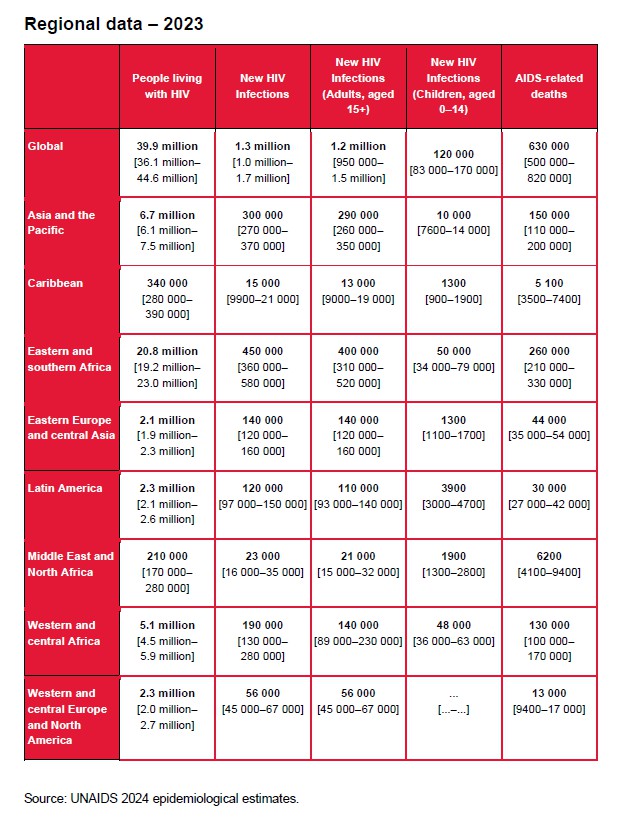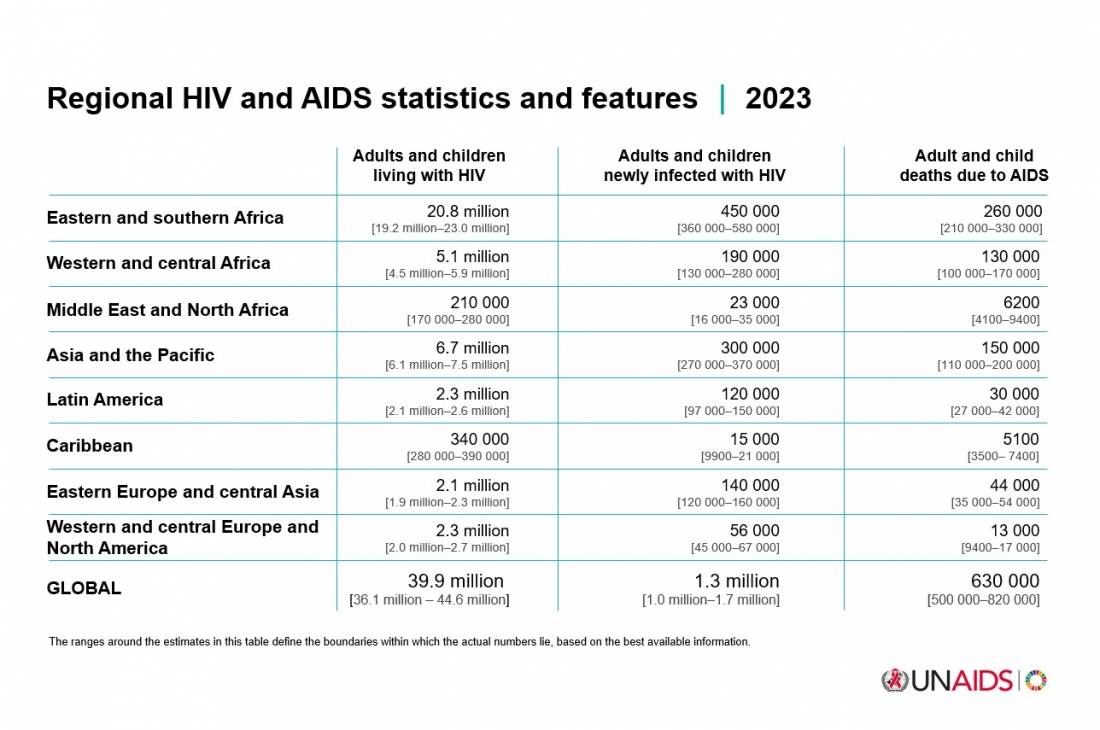
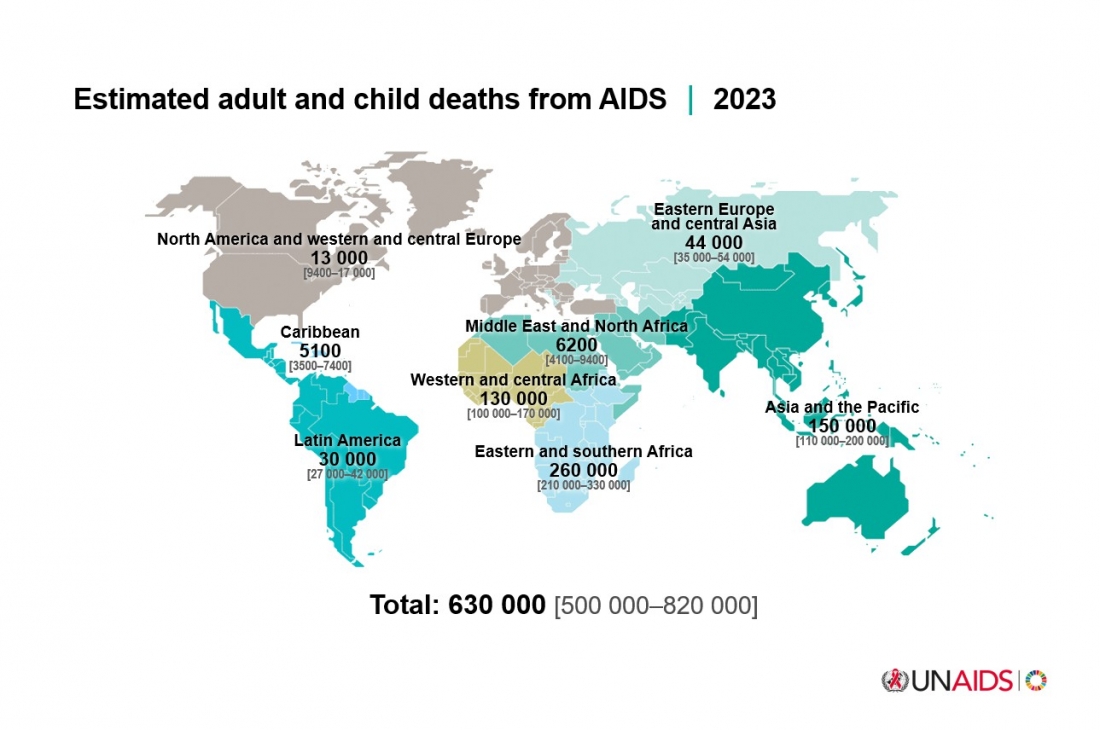
< 2023년 세계 HIV/AIDS 현황 >
♠세계 HIV 통계
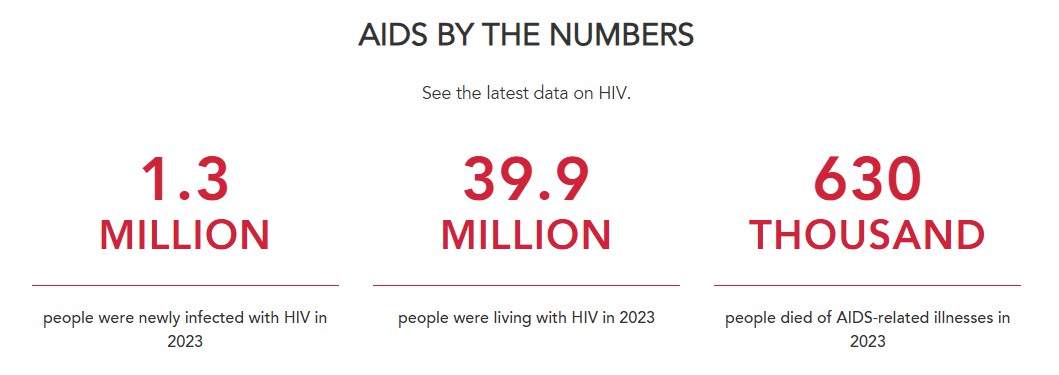
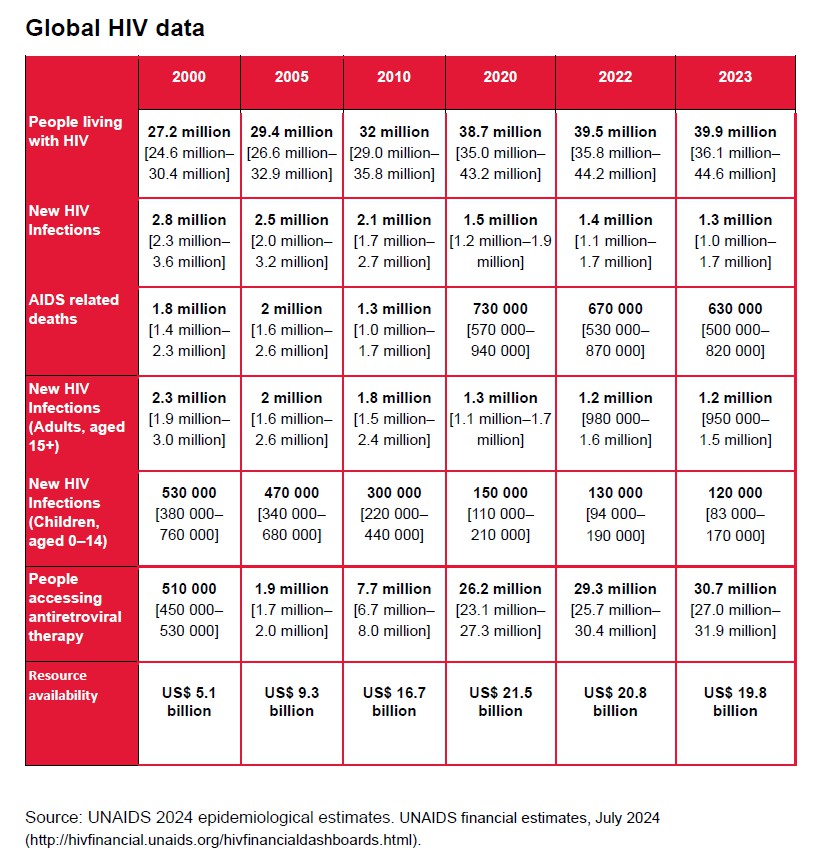
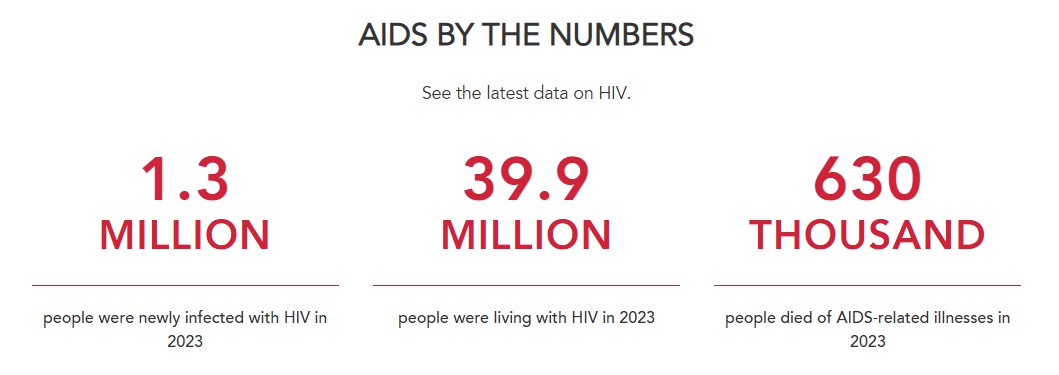
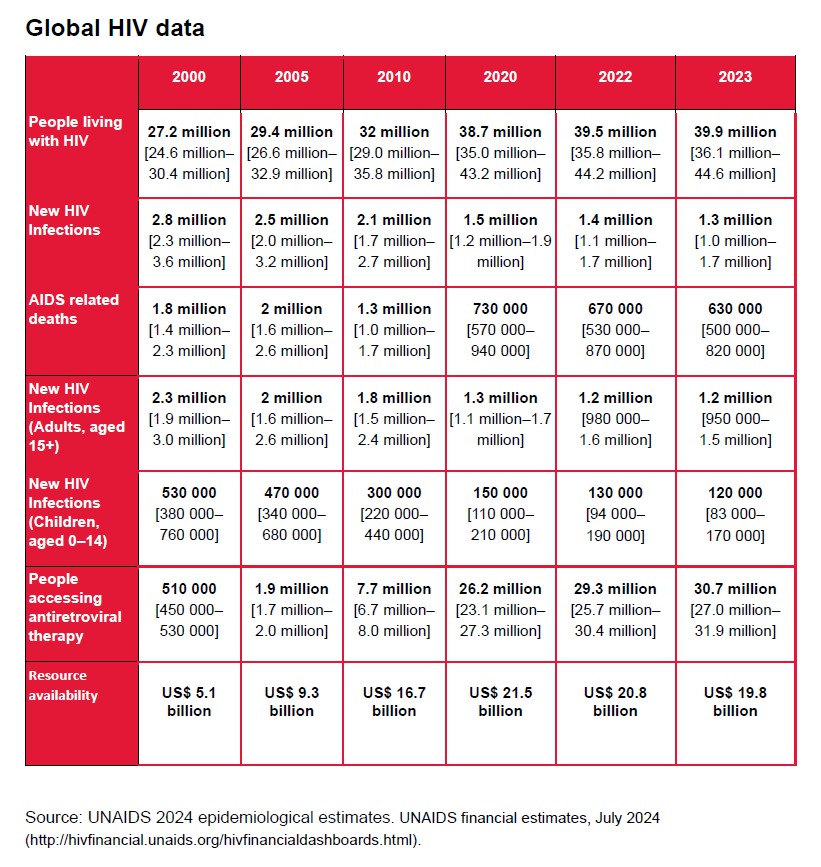
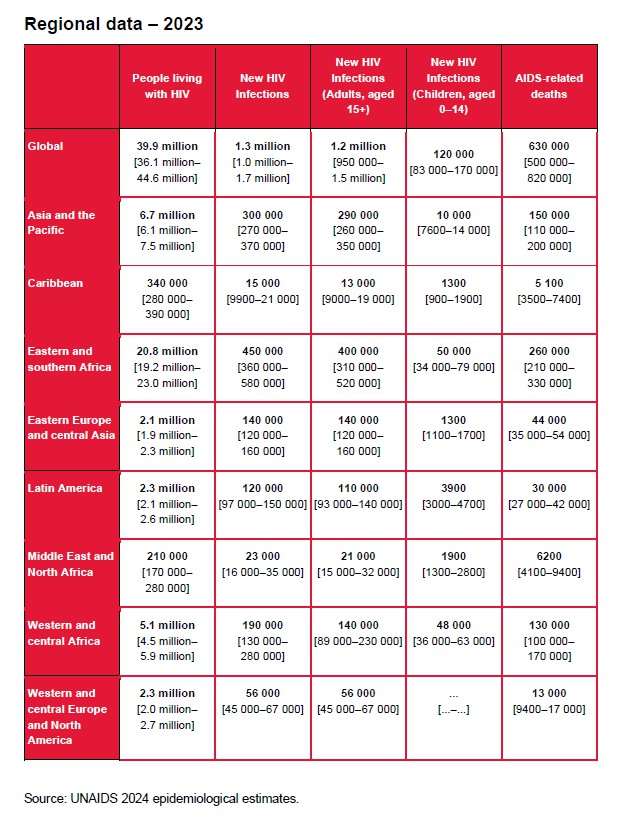
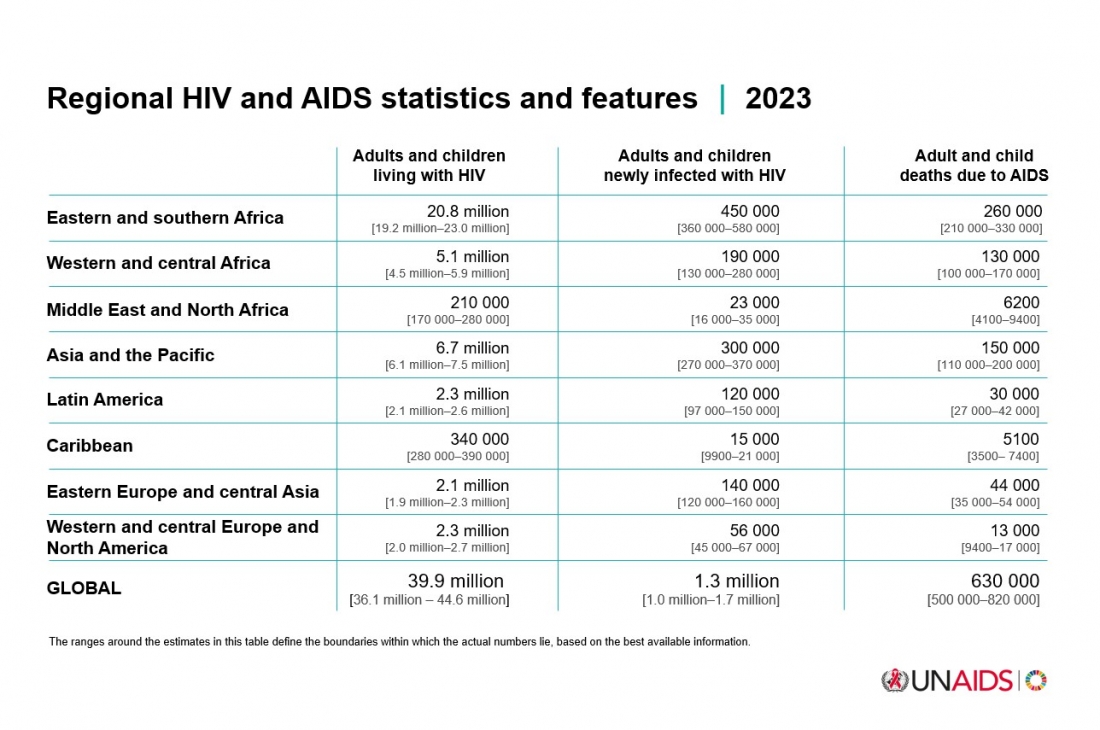
2023년에 전 세계적으로 3,990만 명[3,610만~4,460만 명]이 HIV에 감염되었습니다.
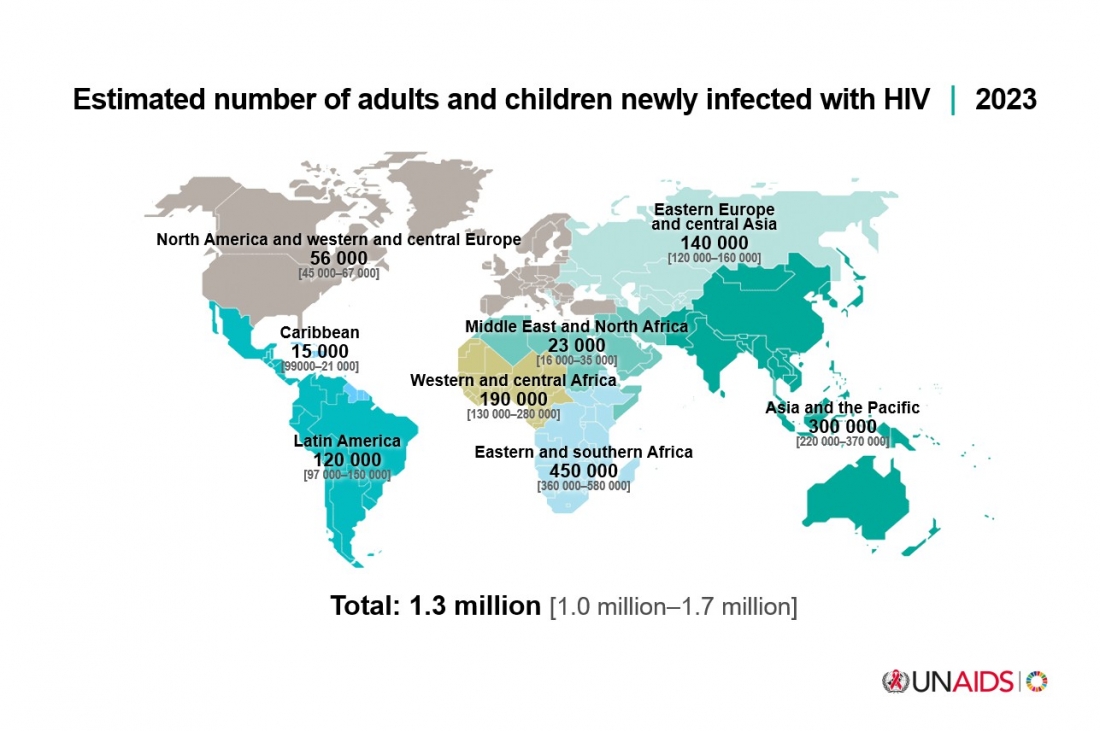
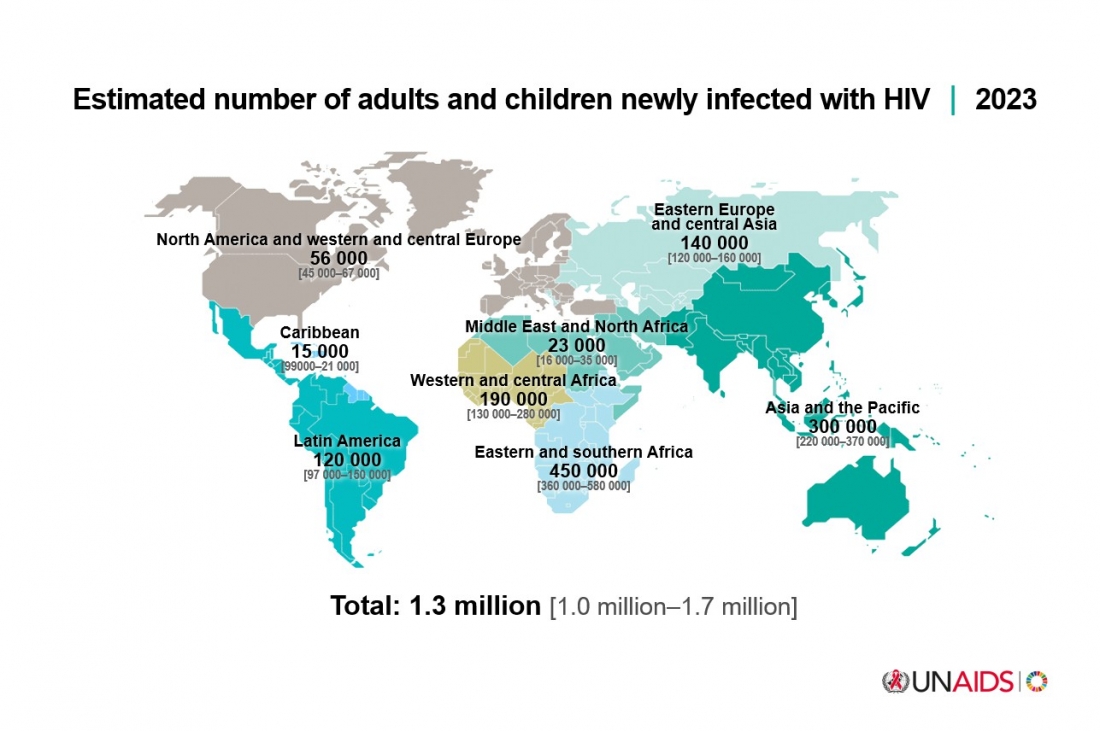
2023년에 130만 명[100만~170만 명]이 HIV에 새로 감염되었습니다.
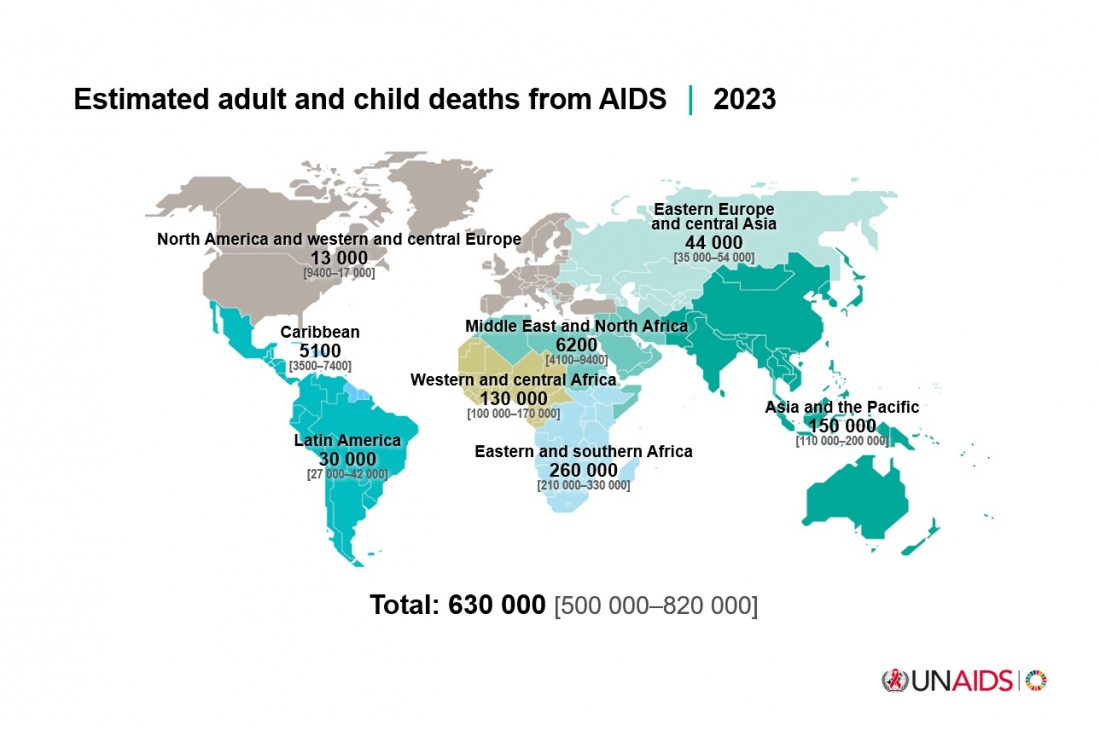
2023년에 630,000명[500,000~820,000명]이 AIDS 관련 질병으로 사망했습니다.
2023년에 3,070만 명[2,700만~3,190만 명]이 항레트로바이러스 요법을 받았습니다.
전염병이 시작된 이후로 8,840만 명[7,130만~1억 1,280만 명]이 HIV에 감염되었습니다.
전염병이 시작된 이후로 4,230만 명[3,570만~5,110만 명]이 AIDS 관련 질병으로 사망했습니다.
♠HIV 감염자
2023년에는 HIV 감염자가 3,990만 명[3,610만 명~4,460만 명]이었습니다.
- 15세 이상 성인 3,860만 명[3,490만 명~4,310만 명]
- 0~14세 아동 140만 명[110만 명~170만 명]
- HIV 감염자 전체의 53%가 여성과 소녀였습니다.
2023년에 HIV 감염자 전체의 86%[69~>98%]가 자신의 HIV 감염 상태를 알고 있었습니다.
2023년에 약 540만 명이 자신이 HIV 감염자라는 사실을 몰랐습니다.
♠HIV 감염자가 항레트로바이러스 요법을 받고 있습니다
2023년 12월 말 현재 3,070만 명[2,700만~3,190만 명]이 항레트로바이러스 요법을 받고 있으며, 이는 2010년의 770만 명[670만~800만 명]에서 증가한 수치이지만, 2025년 목표인 3,400만 명에는 여전히 못 미칩니다.
2023년 현재 모든 HIV 감염자의 77%[61~89%]가 치료를 받고 있습니다.
- HIV 감염자 15세 이상 성인의 77%[62~90%]가 치료를 받을 수 있었고, 0~14세 아동의 57%[41~75%]도 치료를 받을 수 있었습니다.
- 15세 이상 여성의 83%[66~96%]가 치료를 받을 수 있었지만, 15세 이상 남성의 72%[56~84%]만이 치료를 받을 수 있었습니다.
2023년에 HIV에 감염된 임산부의 84% [72–>98%]가 자녀에게 HIV가 전파되는 것을 막기 위해 항레트로바이러스 약물을 이용할 수 있었습니다.
♠새로운 HIV 감염
새로운 HIV 감염은 1995년 정점 이후 60% 감소했습니다.
- 2023년에는 130만 명[100만~170만 명]이 HIV에 새로 감염되었으며, 1995년에는 330만 명[260만~420만 명]이었습니다.
- 2023년에는 여성과 소녀가 모든 새로운 감염의 44%를 차지했습니다.
2010년 이후 새로운 HIV 감염은 210만 명[170만~270만 명]에서 2023년에는 130만 명[100만~170만 명]으로 39% 감소했습니다. 그러나 이는 2025년까지 370,000명 이하로 줄이는 목표에는 크게 못 미칩니다.
2010년 이후 어린이의 새로운 HIV 감염은 300,000명[220,000~440,000명]에서 62% 감소했습니다. 2010년에서 2023년에는 120,000명[83,000~170,000명]으로 감소합니다. 새로운 HIV 감염 감소에 있어서 진전이 가장 큰 곳은 어린이들이지만 최근 몇 년 동안 진전이 정체되었습니다.
♠AIDS 관련 사망자
AIDS 관련 사망자는 2004년 최고치 이후 69% 감소했고 2010년 이후 51% 감소했습니다.
2023년에는 전 세계적으로 약 630,000명[500,000~820,000명]이 AIDS 관련 질병으로 사망했으며, 2004년에는 210만 명[160만~270만 명], 2010년에는 130만 명[100만~170만 명]이었습니다.
2025년 목표는 250,000명 미만입니다.
2010년 이후 AIDS 관련 사망률은 여성과 소녀의 경우 56%, 남성과 소년의 경우 47% 감소했습니다.
2023년에는 1분마다 한 명이 HIV로 사망했습니다.
♠HIV에 가장 큰 영향을 받는 사람들
성인 인구(15~49세)의 중간 HIV 유병률은 전 세계적으로 0.8%였습니다. 그러나 소외, 차별, 어떤 경우에는 범죄화로 인해 중간 유병률은 특정 집단에서 더 높았습니다.
- 동아프리카와 남부아프리카의 15~24세 젊은 여성과 소녀에서 2.3% 더 높음
- 게이 남성 및 남성과 성관계를 갖는 다른 남성에서 7.7% 더 높음
- 성 노동자에서 3% 더 높음
- 약물을 주사하는 사람에서 5% 더 높음
- 트랜스젠더에서 9.2% 더 높음
- 교도소에 있는 사람에서 1.3% 더 높음.
♠여성과 소녀
전 세계적으로 2023년 모든 신규 HIV 감염의 44%가 여성과 소녀(모든 연령대)에서 발생했습니다.
사하라 이남 아프리카에서 여성과 소녀(모든 연령대)는 모든 신규 HIV 감염의 62%를 차지했습니다. 다른 모든 지리적 지역에서 2023년 신규 HIV 감염의 73% 이상이 남성과 소년에서 발생했습니다.
매주 15~24세의 4000명의 청소년 소녀와 젊은 여성이 2023년 전 세계적으로 HIV에 감염되었습니다. 이 중 3100건의 감염이 사하라 이남 아프리카에서 발생했습니다.
검사 및 치료 대상(95~95~95)
2023년 HIV에 감염된 모든 사람의 86%[69~>98%]가 자신의 HIV 감염 상태를 알고 있었습니다. 자신의 상태를 알고 있는 사람 중 89%[71~>98%]가 치료를 받고 있었습니다. 치료를 받는 사람들 중 93% [74–>98%]가 바이러스가 억제되었습니다.
0~14세 아동의 경우 95–95–95 목표는 66% [47%–87%], 86% [62%–>98%], 84% [60%–>98%]였습니다. 여성의 경우 95–95–95 목표는 91% [72–>98%], 91% [73–>98%], 94% [75–>98%]였습니다.
남성의 경우 95–95–95 목표는 HIV에 감염된 성인 남성의 83% [65–97%]가 자신의 HIV 감염 상태를 알고 있었고, 86% [68–>98%]가 치료를 받고 있었으며 94% [74–>98%]가 바이러스가 억제되었습니다.
HIV 감염자 전체 중 86% [69–>98%]는 자신의 감염 상태를 알고 있었고, 77% [61–89%]는 치료를 받고 있었으며, 72% [65–80%]는 2023년에 바이러스가 억제되었습니다.
♠투자
2023년 말에 저소득 및 중소득 국가의 AIDS 대응에 198억 달러(2019년 미국 달러 기준)가 사용 가능했으며, 이 중 약 59%가 국내에서 조달되었습니다.
HIV에 대한 자금은 2022년에서 2023년 사이에 5% 감소했고, 2020년에서 2023년 사이에는 7.9% 감소했습니다.
자금은 2025년에 이전에 고소득 국가로 간주되었던 국가를 포함한 저소득 및 중소득 국가의 AIDS 대응에 필요한 293억 달러(2019년 미국 달러 기준)에 크게 못 미쳐 AIDS를 공중 보건 위협으로 종식시키는 데 필요한 수준입니다.
Global HIV data
Source: UNAIDS
FACT SHEET 2024
♠Global HIV statistics
39.9 million [36.1 million–44.6 million] people globally were living with HIV in 2023.
1.3 million [1 million–1.7 million] people became newly infected with HIV in 2023.
630 000 [500 000–820 000] people died from AIDS-related illnesses in 2023.
30.7 million people [27–31.9 million] were accessing antiretroviral therapy in 2023.
88.4 million [71.3 million–112.8 million] people have become infected with HIV since the start of the epidemic.
42.3 million [35.7 million–51.1 million] people have died from AIDS-related illnesses since the start of the epidemic.
♠People living with HIV
In 2023, there were 39.9 million [36.1 million–44.6 million] people living with HIV. - 38.6 million [34.9 million–43.1 million] adults (15 years or older).
- 1.4 million [1.1 million–1.7 million] children (0–14 years).
- 53% of all people living with HIV were women and girls.
86% [69–>98%] of all people living with HIV knew their HIV status in 2023.
About 5.4 million people did not know that they were living with HIV in 2023.
♠People living with HIV accessing antiretroviral therapy
At the end of December 2023, 30.7 million [27–31.9 million] people were accessing antiretroviral therapy, up from 7.7 million [6.7–8 million] in 2010, but still short of the 34 million target for 2025.
In 2023, 77% [61–89%] of all people living with HIV were accessing treatment. - 77% [62–90%] of adults aged 15 years and older living with HIV had access to treatment, as did 57% [41–75%] of children aged 0–14 years.
- 83% [66–96%] of women aged 15 years and older had access to treatment; however, just 72% [56–84%] of men aged 15 years and older had access.
84% [72–>98%] of pregnant women living with HIV had access to antiretroviral medicines to prevent transmission of HIV to their child in 2023.
♠New HIV infections
New HIV infections have been reduced by 60% since the peak in 1995. - In 2023, 1.3 million [1 million–1.7 million] people were newly infected with HIV, compared to 3.3 million [2.6 million–4.2 million] people in 1995.
- Women and girls accounted for 44% of all new infections in 2023.
Since 2010, new HIV infections have declined by 39%, from 2.1 million [1.7 million–2.7 million] to 1.3 million [1 million–1.7 million] in 2023. However, this falls far short of the target of getting below 370 000 by 2025.
Since 2010, new HIV infections among children have declined by 62%, from 300 000 [220 000–440 000] in 2010 to 120 000 [83 000–170 000] in 2023. Although progress in reducing new HIV infections is greatest among children, progress has stalled in recent years.
♠AIDS-related deaths
AIDS-related deaths have been reduced by 69% since the peak in 2004 and by 51% since 2010.
In 2023, around 630 000 [500 000–820 000] people died from AIDS-related illnesses worldwide, compared to 2.1 million [1.6 million–2.7 million] people in 2004 and 1.3 million [1 million–1.7 million] people in 2010.
The target for 2025 is fewer than 250 000.
AIDS-related mortality has declined by 56% among women and girls and by 47% among men and boys since 2010.
In 2023, someone died of HIV every minute.
♠People most affected by HIV
Median HIV prevalence among the adult population (ages 15–49) was 0.8% globally. However, because of marginalization, discrimination and in some cases criminalization, median prevalence was higher among certain groups of people. - 2.3% higher among young women and girls aged between 15 and 24 in eastern and southern Africa
- 7.7% higher among gay men and other men who have sex with men
- 3% higher among sex workers
- 5% higher among people who inject drugs
- 9.2% higher among transgender people
- 1.3% higher among people in prisons.
♠Women and girls
Globally 44% of all new HIV infections were among women and girls (all ages) in 2023.
In sub-Saharan Africa, women and girls (all ages) accounted for 62% of all new HIV infections. In all other geographical regions, over 73% of new HIV infections in 2023 occurred among men and boys.
Every week, 4000 adolescent girls and young women aged 15–24 years became infected with HIV globally in 2023. 3100 of these infections occurred in sub-Saharan Africa.
♠Testing and treatment targets (95–95–95)
In 2023, 86% [69–>98%] of all people living with HIV knew their HIV status. Among people who knew their status, 89% [71–>98%] were accessing treatment. And among people accessing treatment, 93% [74–>98%] were virally suppressed.
Among children ages 0–14 years the 95–95–95 targets were 66% [47%–87%], 86% [62%–>98%], 84% [60%–>98%] Among women, the 95–95–95 targets were: 91% [72–>98%], 91% [73–>98%], and 94% [75–>98%].
Among men, the 95–95–95 targets were: 83% [65–97%] of adult men living with HIV knew their HIV status, 86% [68–>98%] were accessing treatment and 94% [74–>98%] were virally suppressed.
Among all people living with HIV, 86% [69–>98%] knew their status, 77% [61–89%] were accessing treatment and 72% [65–80%] were virally suppressed in 2023.
♠Investments
At the end of 2023, US$ 19.8 billion (in constant 2019 United States dollars) was available for the AIDS response in low- and middle-income countries—around 59% was from domestic sources.
Funding for HIV dropped by 5% from 2022 to 2023, and by 7.9% between 2020 and 2023.
Funding is far short of the US$ 29.3 billion (in constant 2019 United States dollars) which will be required for the AIDS response in low- and middle-income countries, including countries formerly considered to be upper-income countries, in 2025 to get on track to end AIDS as a public health threat.